Practical writing on building with AI agents and LLMs, from architecture decisions and model choices to inference costs and the code behind them. On-site and Medium, all in one place. Back to the blog.
OpenAI says an upcoming cyber model found 948 distinct Linux kernel privilege escalation bugs in one mid-October run, with working root exploits, for about $1.2 million in API credits. Here is what actually happened, why it changes the old assumption that a low-privilege foothold is contained, and the eight changes I'd make to a startup's servers, containers and CI this week.
Moonshot AI put the full Kimi K3.1 Pro weights on Hugging Face this week: a 2.8T-parameter MoE with 104B active, a 1M-token context and API pricing of $2 / $10 per million tokens. Here is what actually shipped, what the licence allows, why 1.56 TB of weights rules out self-hosting for almost every startup, how it compares on cost with Claude Opus 5.5, and a one-week evaluation plan before you switch anything.
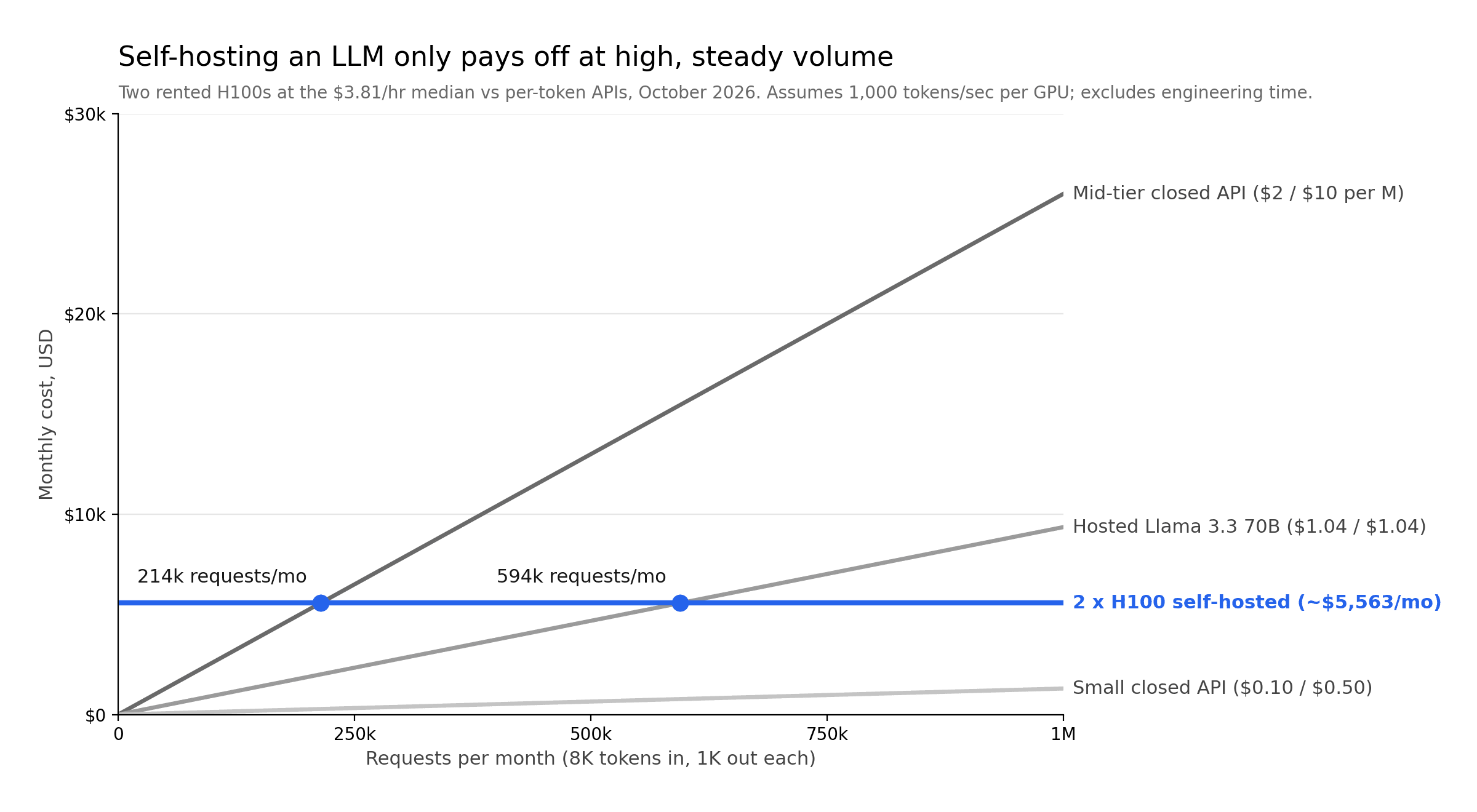
Is it cheaper to self-host an open-weight LLM or pay per token? I ran the 2026 numbers: two rented H100s cost about $5,560 a month at any volume, which only beats a mid-tier API above roughly 214,000 requests a month and a hosted open model above roughly 594,000. Here is the break-even math, what it leaves out, and when self-hosting is right anyway.
RAG vs fine-tuning, explained for founders by someone who runs a multi-LLM platform: retrieval gives a model the facts, fine-tuning changes how it behaves, and most AI startups should exhaust prompting first. Here is how to decide, what each one really costs, when to fine-tune an LLM, and the mistakes that make AI products expensive to change.
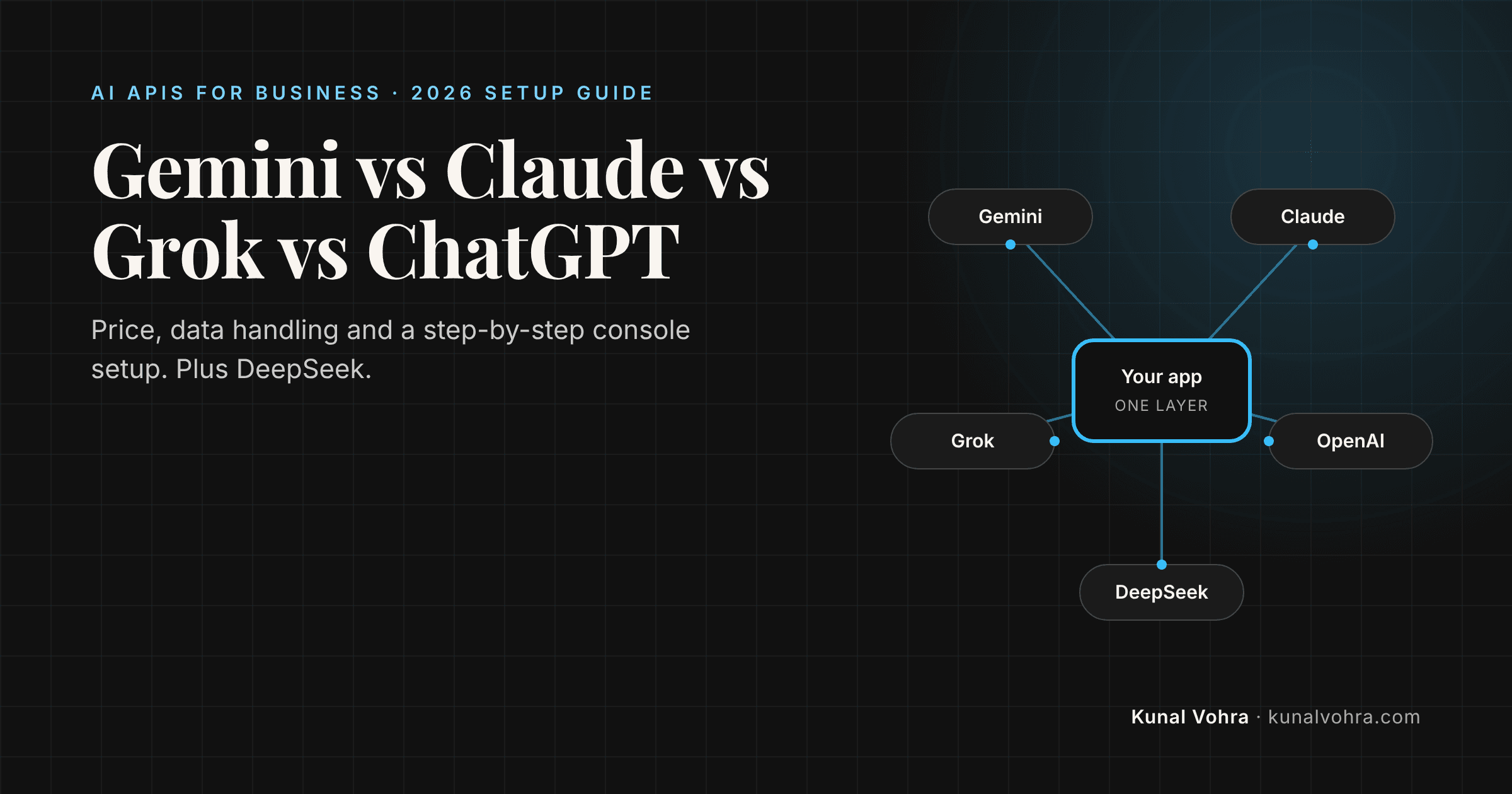
If your business is building on AI, use the providers' APIs directly from their developer consoles, not the chat apps. Here is how Gemini, Claude, Grok, OpenAI (ChatGPT) and DeepSeek compare on price, data handling and fit, and the exact steps to set each one up safely: org account, billing limits, scoped keys, your first call, data controls, and a switchable architecture.
A tested setup for AirLLM 2.11.0 on an M-series Mac: the exact install, an ungated Llama 3.1 download to an external SSD, the four Apple Silicon fixes in one wrapper script, real speeds, and the errors you will hit.
AirLLM promises 70B language models on a 4GB GPU. I ran it on a base M4 Mac mini with an external SSD, fixed four bugs to get it working on Apple Silicon, and timed every token. Llama 3.1 8B took 19.6 seconds per word. Here are the real numbers and when AirLLM is worth it.
Five days ago a $40M startup launched a frontier model that cannot write a single word. Jev takes your program state and returns typed decisions with probabilities, in under a second, for almost nothing. Here's what it is, which claims hold up, and where I'd actually use it.
AI writes most of the code I ship. The 2019 junior developer role is gone and I don't hire for it. But 84% of developers use these tools and only 3% trust the output, and that gap is the job description I actually pay for now.
You used to hire a tool. Now the tool does the hiring. I've watched founders replace entire ops workflows with a single agent. Here's what that actually looks like and what it means for what you're building.